Fossils!
Project URL:
http://teachersnetwork.org/teachnet-lab/glasgold/fossilcontents.htm
How
it works:
What child today is
not enamored with dinosaurs! But how do we know anything at all about dinosaurs or other kinds of life that inhabited the Earth so long
ago? The answer is in fossils. Fossils! engages the
student in a study of how these fascinating surviving remnants from a
past geologic age were formed, the different types of fossils, what they teach us about animals that once lived, and who some of
the famous fossil hunters--or paleontologists--are and what they
have found. The unit incorporates technology for the use of
Internet-based research and interactive activities, and hands-on
lessons where the students create their own fossils. After
finishing this unit, each student can call him/herself
an amateur paleontologist!
Standards addressed:
Students gain an
understanding of objects and materials and their properties, develop an understanding of big ideas and unifying
concepts, and begin to ask questions about natural phenomena, events,
and past discoveries. They identify problems, propose and implement
solutions, and evaluate the accuracy, design, and outcome of
investigations. They work individually and in teams to collect and
share information and ideas, and use scientific notation to write
their experiments.
Materials used:
Materials
include a computer with
Internet access for
each student or group of students; a
word processing
program such as Apple Works or MS Word; and a drawing program like Kid
Pix or HyperStudio.
The
students:
The students are of
average ability from grades 3-5, with good basic computer and Internet
skills.
Overall value:
There are many great
features of Fossils! Of course, the use of the computer
for word processing, research, and drawing is an easy and enjoyable
way to get children to learn about the topic. There are many hands-on
activities that enable the students to create and learn about the
different types of fossils while developing insight and appreciation
for the work of the paleontologist.
Tips:
Make sure the
students know how to
use the Internet for research and find
several sites they can go to and bookmark them. This
prevents them from wasting time by going to irrelevant sites. Motivate
students by showing them different fossils, either on the Internet
or in class, and give out the rubric before starting the unit so they
know exactly what to strive for.
|
About the teacher:
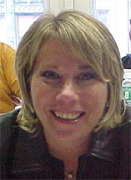
Bonnie Glasgold is a
science enrichment teacher at P.S. 101, Brooklyn. She has been teaching
for over twenty-five years and has been involved with Teachers Network
for over six years. She uses the Workshop Model in her classes, and
has written many curriculum units for TeachNet. She also conducts
New Teachers' Online Survival Courses in classroom management and
violence prevention.
Email: bmglas@aol.com
Subject Areas:
Science
English
Technology
Grade Levels:
3-5
|