"The
Vision" Contest
Project URL:
http://teachersnetwork.org/teachnet-lab/motthall/asalcedo/
ExploravisionUnit/Exploreindex.htm
How
it works:
The Toshiba/NSTA ExploraVision competition motivates students to
develop higher-order thinking skills--by encouraging them to think about their role in
the future and to use their imaginations and creativity while applying
their knowledge of science. It is an excellent way for
students to learn how to work in collaborative learning groups on an
interdisciplinary project. ExploraVision and other competitions can
help all students become interested in science and technology as they
apply to everyday life. Participating in a competition gives all students the
opportunity to be recognized for their good ideas and to win prizes.
Everyone who enters is a winner!
Students work
collaboratively to study a current technology and, using scientific principles,
predict what that technology will be like 30 years from now. They
research the technology's origins, how it presently works, and what it might entail in the future, as well as its
effects on society and what breakthroughs need to occur to make their
future technology a reality.
Standards addressed:
Students identify problems and implement and evaluate a design.
They read and comprehend informational materials, produce
written or oral works that restate or summarize information;
participate constructively in group meetings; prepare and deliver a
presentation; describe and analyze the effects of changing
technologies on the global community; demonstrate knowledge of current
changes in information technologies; use content-specific tools,
software, and simulations (e.g. Web tools) to support learning and
research; collaborate with peers, experts, and others using
telecommunications and collaborative tools; and select and use
appropriate tools and technology resources to accomplish a variety of
tasks and solve problems.
Materials used
"The
Vision" Contest requires a
computer with Internet access, books, encyclopedias, videos,
periodicals, catalogs, and probably experts in the field. It also
requires PowerPoint and spreadsheet software, and a computer
projection device.
The
students:
This program is suitable for students from kindergarten though
twelfth grade. ExploraVision is not just for high
achievers. Many successful inventors had difficulties in school
or were average students.
Overall value:
The best description of this program's features is from another
participating teacher, Diana Celle of Holmes Elementary School in San
Diego, California, who says "The Toshiba/NSTA ExploraVision Awards program
is a hands-on/minds-on project. It is what science is all about.
It
permits students to think of themselves as investigators. They learn
new ways to approach problems and learn how to make connections to
their existing knowledge base. They visualize and invent in reference
to what is known. And, most importantly, they learn how to think and
work as a team."
Tips:
Toshiba provides much help and has their own link to a "tips for
teachers" page at: http://toshiba.com/tai/exploravision/teachersonly.html
There are tons of past winners and information at:
http://toshiba.com/tai/exploravision/index.html.
|
About the teacher:
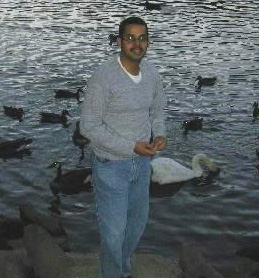
Anthony Salcedo is laptop coordinator at the Mott Hall School, the
first inner city public school to start a laptop program. He was a
keynote speaker at the Microsoft Laptop Summit 2000, has presented at
other technology conferences around the country, and has received
recognition from two superintendents for his achievements. Anthony is
also a certified NFTE instructor and has worked as a translator in the
Caribbean for a division of the United Nations. He has
worked as an adjunct professor for NYU and Mercy College and is in his
tenth year of teaching in the New York City public school system.
Email:
asalcedo@motthall.echalk.com
Subject
Areas:
Science
Technology
Grade
Levels:
K-12
|