| Environmental
Science
HOW IT WORKS
Environmental Science is a course lasting one school year. Student
responsibilities include homework assignments, which can be
e-mailed to the teacher, and labs, which often require
students to design original procedures and make frequent use
of reference books. Theoretical topics include food chains
and webs, adaptation and evolution, ecological succession,
material cycles, and land and water biomes such as tropical
rain forests and coral reefs. Applied topics include air and
water pollution, ozone depletion, overpopulation,
alternative energy sources, and the environmental impact of
agriculture. Many of the lab exercises last several weeks.
As an example, one lab investigates the effect of fertilizer
on freshwater plant algae. Students prepare containers of
pond water (to provide microorganisms), elodea plants, and
de-chlorinated water. Each group of students prepares two
containers. One container receives 10 ml. of powered plant
food and the other does not. The containers are then covered
to prevent evaporation. All containers are labeled and
placed on shelves in a greenhouse or in light blanks
(shelving units with fluorescent “grow-lights”). These are
monitored weekly for a period of four weeks. Students
observe the color and apparent health of elodea plants and
the growth of algae on the containers. (You can use soda
bottles with the tops removed or any clear container.)
Typical results might show that the bottle with the
fertilizer has shown considerable algae growth, compared to
the one without the fertilizer.
THE STUDENTS
This program is offered as an elective for all juniors and
seniors who have completed their Regents requirements. It
has also been adapted for use by the Special Education
Department and might be suitable for gifted middle school
students who have taken a year of Earth Science. Currently,
Edward R. Murrow High School offers seven sections of
Environmental Science with 34 students per class. Some are
average achievers and others are quite gifted. Others have
physical disabilities or require resource room support. The
range of ability can often be used to advantage by pairing
those with different abilities. Many of the stronger
students have voiced interest in teaching, so the experience
of helping their peers is valuable to them.
THE STAFF
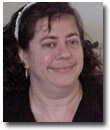
Su Ellen Silverman is a licensed Biology teacher with
twenty-one years of experience in the New York City school
system. Seventeen of those years have been spent at Edward
R. Murrow High School. She has taught Regents Biology, Earth
Science, Astronomy, and Environmental Science; has
participated in project leadership at York College in 1989;
and earned a Woodrow Wilson fellowship, which enabled her to
study at Princeton University in 1999.
WHAT YOU NEED
Many of the laboratory materials are simple, inexpensive,
and often improvised, i.e., solar reflectors made from
Styrofoam cups covered with aluminum foil. Much of the
equipment is basic lab material that a school is likely to
have already (e.g., balance scales, test tubes, and
dissecting kits). Owl pellets are used for a lab on food
chains and must be purchased yearly. Large numbers of
transparent containers are required for experiments.
OVERALL VALUE
The academic content is both interesting and relevant to the
students. Even the weaker ones find their curiosity sparked.
A number of students have extended their knowledge well
beyond the classroom. Each year, students return from
vacations, proudly announcing that they have recognized
organisms or relationships that were studied in class. It is
not unusual for students to apply their knowledge to their
summer jobs. |