Adaptor Grants Home:
Teachers Network: Adaptor Grants: Opening Our Own Post Office
Adapted By: Judy (Ka Fai) Chan
This is Ms. Chan's third year teaching first grade at P.S. 124. She graduated from NYU with a bachelor's degree in early childhood and special education. Currently, she is pursuing a master's degree in literacy education at Hunter College.
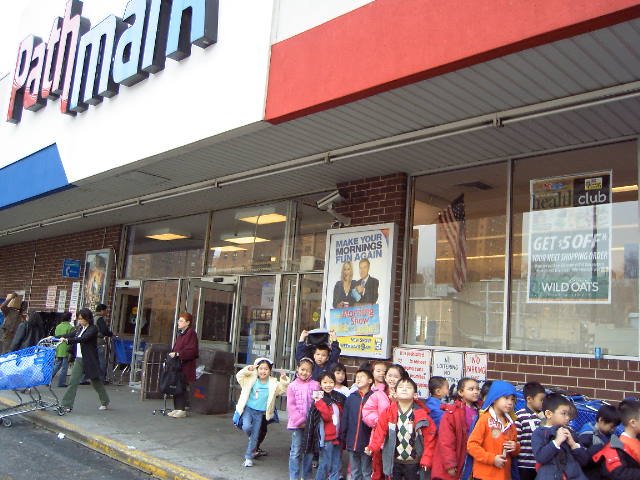
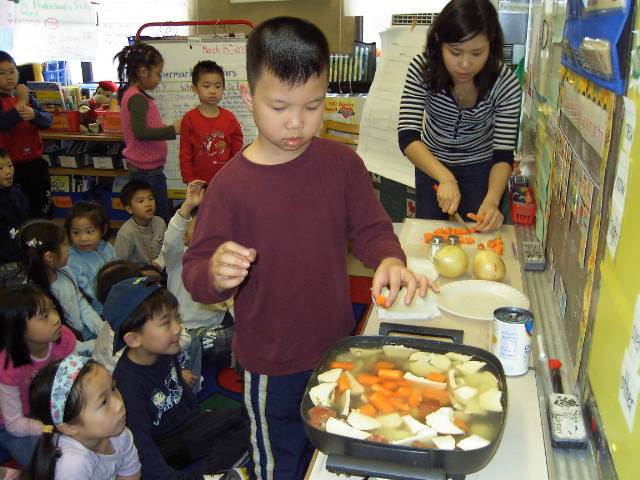
Instead of opening up a school-wide post office, our classroom studied the components of a supermarket so we could open up our own supermarket. We studied the various workers, their responsibilities, and all the features of a supermarket.
Instructional
Objectives
The students will become familiar with the different jobs in a supermarket and learn the responsibilities of the various workers.
The students will be able to identify different denominations of money (coins and bills.)
The students will interact socially within the community, providing services and goods for others, while also supporting each other in order to keep their supermarket operating properly.
Technology Integration
Microsoft Word was used to create a student worksheet. The worksheet was given as homework after our field trip to the supermarket.
Assessment
The assessment came mainly from the share. The teacher should gauge the students’ ability to read the chart through the discussion on the collected data. The teacher should note whether or not the students can make meaningful connections between the collected data and what they are communicating. Are the connections clear and concise? Are the children able to answer the questions? Are the children able to formulate more questions that are not answered through the chart? These are all means by which the teacher can assess the students’ ability to collect and analyze data. In addition, the students’ assessment will take place both formally and informally, through observations and actual work produced. The evaluation of the students’ understanding will be based on:
Letters written to supermarket employees.
Lists written for recipes.
Completion of graphic organizers (KWL chart, Venn diagrams, graphs).
Social interactions with supermarket employees.
Identification and manipulation of money.
Tips
for Teachers
My recommendatioin is to focus on something very specific during the trip to the actual supermarket. The focus can be on purchasing items, interviewing workers, noticing signs, or just to take a tour. Breaking up the trips and having different goals for every visit will help children stay focused and remain interested throughout the study.
Student Work Samples
Click on each thumbnail to see a full-screen version.
Come across an outdated link?
Please visit The Wayback Machine to find what you are looking for.