Lesson
Materials (word document)
Materials
- Loose-leaf
paper
- Assignment
Sheets
- Pencil
- Scientific
Calculator or better
- Excel
Spreadsheet software (optional)
Lesson
Length
- One class period for the lesson
- One
class period for the follow up lesson
NYS
Math Standards
Students use number sense and numeration to develop an understanding
of the multiple uses of numbers in the real world, the use of numbers
to communicate mathematically, and the use of numbers in the development
of mathematical ideas.
Students:
- understand, represent, and use numbers in a variety of equivalent
forms (integer, fraction, decimal, percent, exponential, expanded
and scientific notation).
- understand and apply ratios, proportions, and percents through a
wide variety of hands-on explorations.
- recognize order relations for decimals, integers, and rational numbers.
Instructions
for students
Study the data about the six regions in New York State. Notice the
type and size of each region. Look closely at the number of students
who attend school in each region and the amount of money that the
region spends on those students.
Then,
using a calculator, do some calculations to complete the second data
table. Here you will get the chance to compare the six regions in
terms of student population and amount of money spent per student.
Finally,
write five true statements about the data, which compare any two regions.
Feel free to use ratios, percents, decimals, and fractions to compare
the data. An example is provided.
After
your class has studied and discussed the data together, your teacher
will show you some additional pieces of data.
Modifications
Some students will need to round the figures to the nearest thousand,
or hundred thousand, if they become overwhelmed with the data.
Extensions
If students have
access to a computer with Microsoft Excel they might make:
- A bar graph
comparing the student populations of the six selected regions
- A bar graph
showing the amount of money spent per general ed or special ed student
in each region
- A comparison
of the total money spent on general education and special education
in each region
|
Subject
Areas:
Math
Grade Levels: 6-8
About
the teacher:
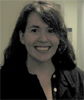
Kara
Imm is a native of Minneapolis, MN where she attended Minneapolis
Public schools and earned an International Baccalaureate Diploma.
She studied American Studies at Stanford University in Palo Alto,
CA and worked for several years with Partners in School Innovation
(a San Francisco Bay Area non-profit and AmeriCorps program committed
to school reform in low-income communities).
She
relocated to New York to study at Bank Street College, earning a Masters
Degree in Education, with a focus on Early Adolescence. After serving
as a middle school teacher and Math Teacher Leader in District 2 for
several years, Kara was awarded a Fulbright Teaching Award, a fully
paid travel and study grant offered each year to a select group of
American educators. In October 2003 while in Tokyo and Nago, Okinawa,
she deepened her knowledge of, and interest in, Japanese Lesson Study
as a vehicle for transforming teaching practice.
Kara
serves as an adjunct Professor at Pace University, where she teaches
graduate courses to NYC Teaching Fellows. Kara also teaches math workshops
to K-12 educators around the city, through her work and affiliation
with the Math in the City project at City College.
karaimm@aol.com
|