| Best Fit Line
Project URL: http://teachersnetwork.org/teachnet-lab/unhs/best
fitline.htm
Purpose of the project:
This unit combines
mathematics and technology to teach students how to find the line of best fit for a set of data, and to
find the correlation coefficient for a set of data.
Major
emphasis is placed on process instead of results. Having the right answer
is great only when it is combined with a clear understanding of the
materials, and also when students are able to create connections to other
topics in the subject.
How it works:
This unit is comprised of three sections:
1. In the first section, the teacher will lead the students through
the process of determining "best fit line". Graphing
calculators will be used.
2. In the second section, students will work
cooperatively in groups of three to study a set of data. They will find the equation of the line that best fits the data, and find
the correlation coefficient.
3.
In the third section, students will access websites with data on chemical
processes in Antarctica and volcanic activity. They will actively
apply their new knowledge to conduct a study, justifying their study with
mathematical analysis.
Standards addressed:
Students
will be able to:
1.
Interpret representations of data, compare distributions of data, and
critique conclusions.
2.
Use a graphing calculator to represent and analyze functions and their
graphs.
3.
Use computer technology (Internet) as a source of information for
research; analyze and integrate data, facts, and ideas to communicate
information.
Computer Applications:
TI-83 graphing calculator, Internet
access, word processing program
The Students:
The students were all 9th graders of mixed ability. Students met for
about six days to complete the project, working both in the classroom and
in the computer lab. The project can be adapted to any age. The higher the
grade, the more work can be done in terms of analysis and predictions.
Overall Value:
This project will help students understand that mathematics and boring
statistics formulas can really help us in our everyday lives. Students
working on the project will also experience increased self esteem, because
they will be able to take an active part in their learning process.
The use of cooperative groups will involve students of every ability level
in the completion of the project. My goal is to teach mathematics
with a 360 degrees open view. It is when the “whole picture” is clear
that it is worth going into details and seeing the “little things”.
Tips:
This unit also contains sample problems, to be completed in-class or
for homework. You may choose different websites containing real-life
data, tailored to your own students' interests. Prior knowledge of
mean, median and mode is required.
|
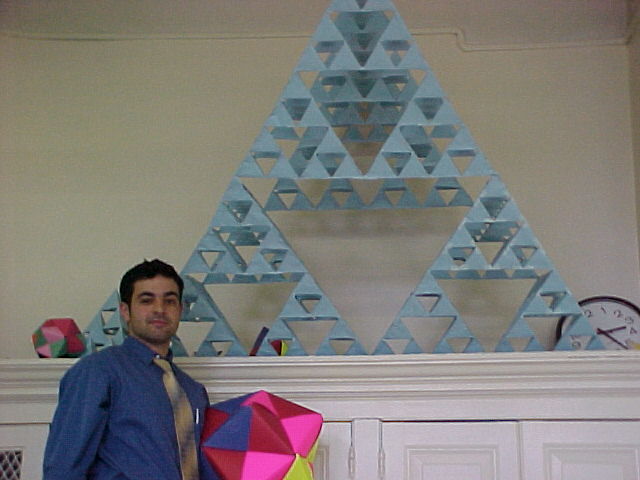
About The Teacher
Francesco Ianni teaches mathematics at
University Neighborhood High School, located on the Lower East Side of
Manhattan. His goal, as a new teacher, is to show students that
mathematics is all around us and not only in math textbooks.
He believes students today are afraid of mathematics
because they associate the subject with long, boring exercises that have
no meaning to them. In his classroom, he incorporates technology and real
life experiences that will make mathematics real.
Email Contact: cicco@mindspring.com
Estimated Class Periods To Complete: 6
class periods, including 2 days in the computer lab
Subject:
Math
Computer Science
Beginning Grade Level: 9
Ending Grade Level: 12
|