E Pluribus Unum
HOW I T WORKS
One objective of E Pluribus Unum is to see
how our nation has evolved from the original
thirteen colonies into what it is today. People
from all over the world with many different
cultures and languages come to the U.S. and form
one country. We first read, discuss, and review If You Lived In Colonial Times by Ann McGovern and
take a trip to Historic Richmond town in Staten
Island to see how early Americans lived. Then
every student picks a state they would like to
learn more about. They use different research
tools, such as the software programs Talking
Map USA and Where In The USA Is Carmen
Sandiego?, which provide information on every
state. They also learn how to search the Internet
for information.
The students then write a report on their state .
They search the Internet (www.yahooligans.com)
to learn how to write letters to obtain
information about other states. The excitement is great
when the replies come in from all over the
country. They share the maps, fact sheets, and
pictures that are received, and learn how to make a
spreadsheet with the names of state governors,
capitals, flowers, and birds. They then read If Your Name Was Changed At Ellis Island by
Ellen Levine, which comes with a software
program that shows what it was like leaving one’s
home for a new place. The students then write
of their own experiences in coming to America.
They explore the origin of the motto E Pluribus
Unum (Out Of Many, Comes One), which is found on our coins, and research the lives of
Susan B. Anthony and Sacagawea, the women featured on the dollar coins. All of their work
is then laminated and bound into a book that stays
in the school as a memento of their
accomplishment.
THE STUDENTS
Our school is an urban school with over five
hundred students and many special education
classes. We are working very hard to bring
our reading level up, and it is climbing. Many of our
students are newly arrived Americans. A
multitude of languages are spoken at home including
Bengali, Spanish, Arabic, Russian, and the
Slavic languages.
THE STAFF
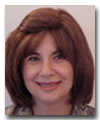
Katarina Kupfer has been teaching for sixteen
years, the last six of them as a computer teacher. She feels strongly about integrating
different curriculum areas with technology. She
designed her school’s web site and is currently
participating in a peer review class.
WHAT YOU NEED
For this program we use computers with
Internet capability, a scanner, digital camera,
software, multimedia encyclopedias, and sets of the
books, If You Lived In Colonial
Times, by Ann McGovern, and If Your
Name Was Changed At Ellis Island, by Ellen Levine, which
includes a software package. Other software programs are
The Cruncher, Talking Map USA, and Where In
The USA Is Carmen Sandiego? We also use word-processing software such as Student
Writing Center and Word, and for graphics,
Print Shop Deluxe and Kid Pix.
OVERALL VALUE
Working on this interdisciplinary program gives
students a chance to explore different facets of
American history, culture, government, and
geography, with technology integrated into
every phase of the project. Whether it is doing a
search on the Internet, viewing software, or
putting together a report, technology is integral.
The culminating book is something concrete to
bring it all together. You can also create slide
shows with HyperStudio and a digital movie
with a camcorder. Teachers enjoy working on this
project because there are no boundaries.
|