Science Notebooks: How to Assess
Natasha Cooke-Nieves
Science Notebooks are NOT:
- Journals, which are usually student reflections with entries beginning with “Today in Science class I…”.
- Logs, which are primarily entries of student data. In a log, students will record the data and refer to their data but not reflect it or analyze it in logs.
Science Notebooks ARE:
- Tools for students to not only record their data but to synthesize and think about their findings. Notebooks are meant as a recording device for students to eventually share their data with their classmates.
SCIENCE NOTEBOOKING
WAYS TO FORMATIVELY ASSESS STUDENT SCIENCE NOTEBOOKING:
- Use rubrics to focus on progress: from beginning, to approaching, to met, to advanced—monitoring stages of predicting; recording and organizing (notes, technical drawings, labeled diagrams, charts, tables, graphs); drawing; questioning; reflecting; using their own notebooks as resources; and , finally; self-assessing.
- Determine if your students can compose their reflections without a prompt?
- Questions to ask yourself as a teacher (focus on one of these questions or multiple questions:
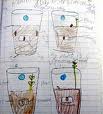
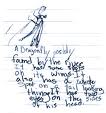
- Are student’s labeling their diagrams/drawings?
- What types of questions are your students asking: comparison (How are rocks different from minerals?), investigable (What happens if I add one more light bulb to the circuit?), problem-posing (How can we attract more butterflies if we change their food?)
- Are your students able to organize their own data by creating an appropriate tool (e.g. chart, table)?
- How and when do students record data in their notebooks?
- How and when do students choose to use information in their notebooks as a resource for further investigations?
- How and when do students choose to share information with their peers?
- How do students enhance their drawings (e.g. color)?
- Do students ask valuable questions in their notebooks upon reflection, i.e. not just intermingled with their observations?
- Do students organize or group their valuable questions in their notebooks?
Resources
 Campbell, Brian & Fulton, Lori (2003). Science Notebooks: Writing about Inquiry. New Hampshire: Heinemann. Campbell, Brian & Fulton, Lori (2003). Science Notebooks: Writing about Inquiry. New Hampshire: Heinemann.
 Michael Klentschy. (2008). Using Science Notebooks in Elementary Classrooms. VA: National Science Teacher Association Press. Michael Klentschy. (2008). Using Science Notebooks in Elementary Classrooms. VA: National Science Teacher Association Press.
Questions or comments? E-mail me. |